


Share This Article
Have you ever wondered why your cat runs away at the thought of a bath? Stress-free cat bathing might seem hard to believe, but it’s possible. By understanding your cat’s needs and learning cat bathing techniques, you can make bath time easier.
The National Cat Groomer’s Institute says most cats need a bath every 4 to 6 weeks. But, some breeds like the Sphynx might need a bath every week. Dr. Alison Diesel from the Texas A&M College of Veterinary Medicine & Biomedical Sciences notes that many cats are clean enough with less bathing thanks to their grooming habits. Still, the way you bathe your pet can make the experience good or bad.
We’re going to share key cat bath tips to make easy catwashing a reality. Before you start, think about your cat’s health, personality, and breed needs. With our guide, bath time will become a chance to bond with your cat, not a stressful event.
Understanding the Necessity of Bathing Your Cat
Cats are known for their cleanliness, but knowing when to bathe your feline friend is key. They usually take care of themselves, but sometimes they need a bath for their health and cleanliness. This is true if they get into something sticky or have a medical issue that makes grooming hard.
Some situations make it clear when to bathe your cat. This includes if they get into chemicals, skunk spray, or too much dirt. Hairless breeds like the Sphynx need regular baths to keep their skin clean. Older cats or those with arthritis might also need help with grooming.
For cats with skin problems or allergies, a bath with special shampoo can help. Owners should know how to bathe a cat and look for signs that a bath is needed. A vet can advise on safe products and how often to bathe, based on the cat’s health.
Understanding your cat’s grooming habits and health condition is key to bathing them safely and without stress.
Bathing isn’t often needed, but knowing when it is is important for cat owners. By understanding when to bathe your feline friend and their cat grooming needs, owners can keep their cats healthy and happy.
Preparing for the Bath: Essential Supplies Checklist
Getting ready for a calm and efficient cat bath is crucial. Having all cat bathing essentials ready beforehand helps. This makes the bath smooth and quick, reducing stress for your pet and mess for you.
Start with a good cat shampoo suited to your pet’s needs. You’ll also need absorbent towels for drying and a rubber mat to prevent slipping. Trimming your cat’s nails and brushing them before the bath helps too. This makes cleaning easier.
To make bath time calm, set a soothing atmosphere. Close doors, use a gentle spray nozzle, and have treats ready. Playing with your cat before bath time can also help calm them down.
Here are some tips from statistics to help you prepare:
Make sure the bath area is safe, like a bathroom or kitchen sink. Activities like clipping nails, brushing, and playing before the bath help. For hairless cats, regular baths are needed to manage excess oil. Long-haired cats might need baths more often if they can’t groom themselves well.
Following these steps and using the data’s strategies makes bath time positive. It builds trust and comfort with your cat. Plus, it’s a chance to check their health.
Bathing Your Cat Without the Scratch Factor
To make bath time safe and comfy for you and your cat, using cat-friendly bathing techniques is key. Start by trimming your cat’s nails before the bath to help avoid injuries. This step is crucial for both your safety and your cat’s comfort.
Next, prepare a non-slip surface like a rubber mat or towel in the sink or tub. This is vital for cat grooming safety. It prevents slipping, which can cause stress and injuries during the bath.
Fill the water with lukewarm water and make sure it covers just your cat’s paws. Too much water can scare your cat, so keep it low. This makes them feel safer.
Start cleaning from the neck down and use a washcloth for their face. Be sure to avoid their eyes, ears, and nose. Use a special shampoo for cats to keep their skin healthy.
Speaking in a calm tone and holding them securely can help keep them calm. Having someone else help can also make things easier. They can talk to your cat in a soothing voice.
The aim is to make baths safe and comfortable for your cat. Don’t bathe them too often unless a vet says so. Regular combing and flea treatment can keep them healthy and reduce the need for full baths.
By using cat-friendly bathing techniques, you can make bath time positive. Focus on preparation, safety, and comfort. This builds trust and reduces anxiety, making your relationship with your cat stronger. It also ensures cat grooming safety.
Executing a Calming Cat Bath: Techniques and Temperatures
Getting your cat used to a stress-free bath is key for their and your well-being. Start by making the bathroom warm and the water as warm as for babies. This small change can make bathing much easier.
Before the bath, trim your cat’s claws to prevent scratches. A non-slip mat in the tub helps your cat feel secure, making the bath safer for both of you.
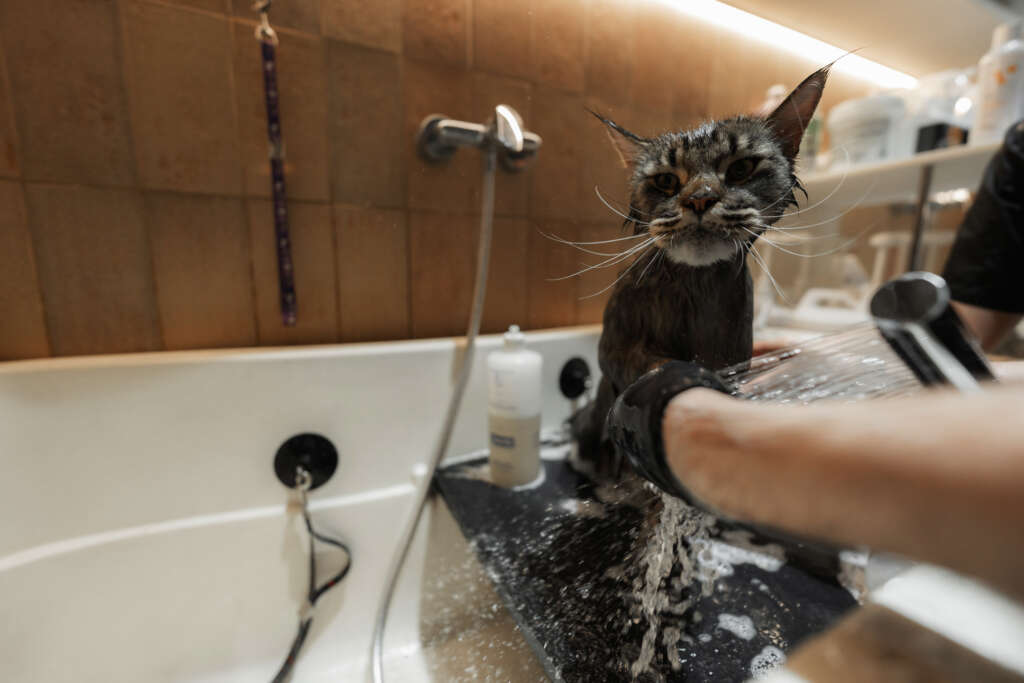
Be gentle when bathing your pet. Put your cat in the tub carefully, letting it get used to the water at its own pace. Using scents like lavender or chamomile and playing classical music can help calm your cat.
Don’t wash your cat’s face and only bathe from the neck down. Cats don’t like their faces touched. Using a pour-over method for rinsing is less scary and helps prevent panic.
Give your cat treats and praise during and after the bath to make the experience positive. If your cat is very stressed, try using facial and body wipes first. This can lead to easier baths later.
It’s important to dry your cat with a towel right after the bath to keep them from getting cold. Avoid loud dryers that might scare your pet. Being patient and positive is crucial for a good bathing experience.
Making Bath Time Easy: Calming Cat Bath Strategies
Turning a cat bath into a pleasant experience is possible with careful planning. Start by getting your cat used to the bathroom with treats and affection. Make sure the bathroom feels safe and familiar to your cat. Schedule the bath when your cat is calm, making the process easier.
Some cats may never need a full bath, but those that do benefit from these tips. Cats that have accidents or skin issues will find these strategies helpful.
Use a toy to distract your cat during the bath, keeping them focused on play. Softly stroking them can also comfort them. Always use a mild, cat-specific shampoo to prevent skin dryness.
If your cat hates water baths, consider dry shampoos or wipes as alternatives. These options make bath time easier for both you and your cat. After the bath, a gentle towel rub can be a soothing reward for your cat.
Make water experiences positive for your cat from a young age. This approach helps 85% of cats accept baths well. Having two people help can make the process smoother. Be quick and efficient during the bath to reduce stress.
Ensure you rinse your cat thoroughly after the bath. Soap residue can irritate their skin, making future baths harder. This step is crucial for a stress-free cat-washing experience.
